The Homeowner’s Guide to Energy Efficient Boiler Installation
Last Updated: November 12, 2026
Quick Summary
An energy efficient boiler installation means sizing, permitting, mounting, piping, venting and commissioning a new boiler so it delivers the heat your home needs while burning as little fuel as possible. It is a sequence of decisions, not a single day of labor, and the sizing calculation, venting path and commissioning settings decide whether you actually save money.
- Condensing boilers recover heat from exhaust gases and suit most hot water systems; steam boilers cannot simply be swapped for one.
- Oversizing is the most common mistake: a boiler that is too big short-cycles, wastes fuel and wears out faster.
- A proper sizing calculation accounts for square footage, insulation, window quality, ceiling height and climate.
- AFUE is the percentage of fuel energy a boiler converts into usable heat over a typical year.
- A 96 AFUE boiler installed oversized will short-cycle and throw away much of the theoretical gain.
Table of Contents
- What an Energy Efficient Boiler Installation Actually Involves
- Boiler Installation Requirements You Need to Meet First
- Boiler Sizing for a House: Matching BTU Output to Your Space
- The Step-by-Step Installation Checklist
- Boiler Installation Cost: What Drives the Final Number
- Reading AFUE Ratings and Comparing Efficiency
- Smart Thermostat for Boilers: Controls, Zoning, and Savings
- Optimizing Efficiency After Installation
- Common Mistakes to Avoid and When to Call a Licensed Pro
- Request a Boiler Installation Quote from TCC Mechanical
- Frequently Asked Questions
What an Energy Efficient Boiler Installation Actually Involves
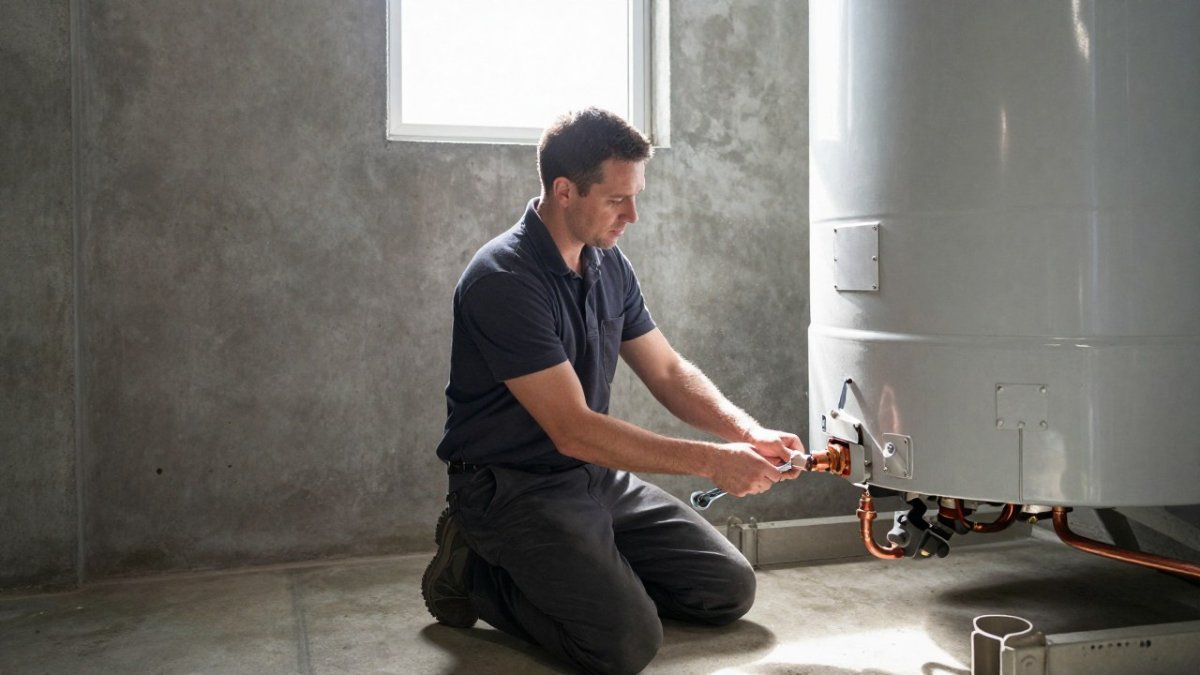
An energy efficient boiler installation is the process of sizing, permitting, mounting, piping, venting, and commissioning a new boiler so it delivers the heat your home needs while burning as little fuel as possible. It is best treated as a sequence of decisions, not a single day of labor. The equipment matters, but the sizing calculation, the venting path, and the commissioning settings decide whether you actually save money. Below, we’ll show you exactly what each stage involves and where homeowners get it wrong.
The core of any efficient system is the heat exchanger, the component that transfers heat from combustion gases into your water. Efficiency lives or dies there, and in how tightly the whole system matches your home’s real load.
Condensing vs. Steam: Which Type Fits Your Home
Condensing boilers recover heat from exhaust gases that older units send up the flue, and they suit most hot water systems. Steam boilers serve homes with radiators plumbed for steam, and they cannot simply be swapped for a condensing unit without reworking the distribution. If your radiators have a single pipe and no circulator pump, you likely have steam. Match the boiler type to the existing system first; efficiency upgrades come second.
Boiler Installation Requirements You Need to Meet First
Boiler installation requirements cover permits, inspections, clearances, venting, and licensed labor, and they vary by municipality. Skipping any of them creates real risk: failed inspections, voided warranties, and in the worst cases, carbon monoxide exposure. This is not a permit you can paper over later.
Permits, Inspections, and Code Compliance
Many jurisdictions require a mechanical permit before a boiler replacement, followed by an inspection of the install. The U.S. Department of Energy’s guidance on home heating systems explains how efficiency and safety standards apply to residential equipment. Your installer should pull the permit, post it, and schedule the inspection. Ask who handles that before work starts.
Pressure vessel rules matter too. A residential boiler is a pressure vessel, and its safety relief valve must be rated for the system and piped to a safe discharge point. Building codes also govern venting requirements, combustion air, and clearance to combustibles. A qualified installer knows the local amendments.
Carbon monoxide detection is non-negotiable. Install CO alarms on every level and outside sleeping areas, and test them the day the boiler fires.
Boiler Sizing for a House: Matching BTU Output to Your Space
Boiler sizing for a house means calculating your home’s actual heat load, not copying the BTU output of the old unit. Oversizing is the most common mistake we see: a boiler that’s too big short-cycles, wastes fuel, and wears out faster. A proper sizing calculation accounts for square footage, insulation, window quality, ceiling height, and your climate.
Contractors use a room-by-room heat loss calculation to arrive at the right BTU output. If your installer quotes a size without measuring your home, push back. The difference between a correctly sized boiler and an oversized one shows up in operating costs over time.
| Home Profile | Typical Sizing Approach | Watch For |
|---|---|---|
| Older home, poor insulation | Full heat loss calculation, add margin | Oversizing to “be safe” |
| Tight newer construction | Calculation often lands smaller | Assuming bigger is better |
| Multi-zone system | Size to peak simultaneous load | Sizing each zone separately and adding up |
| Steam distribution | Size to connected radiator load | Treating steam like hot water |
The Step-by-Step Installation Checklist
Here’s the sequence a professional crew typically follows. This is an overview for planning, not a DIY manual; the work itself belongs to a licensed installer.
Prerequisites: pulled permit, sized boiler, confirmed venting path, gas supply capacity verified, and a clear work area.
- Isolate and drain the old system; disconnect gas and electrical.
- Remove the old boiler and inspect the flue and piping for reuse.
- Set the new unit level, with required clearances to combustibles.
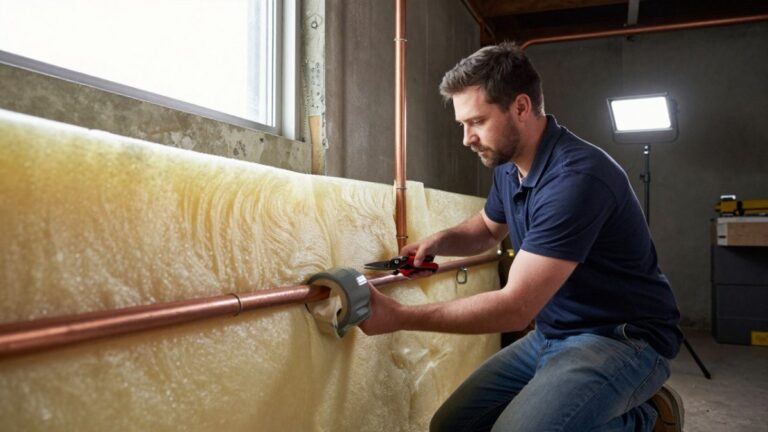
- Connect supply and return piping, plus pipe insulation on exposed runs.
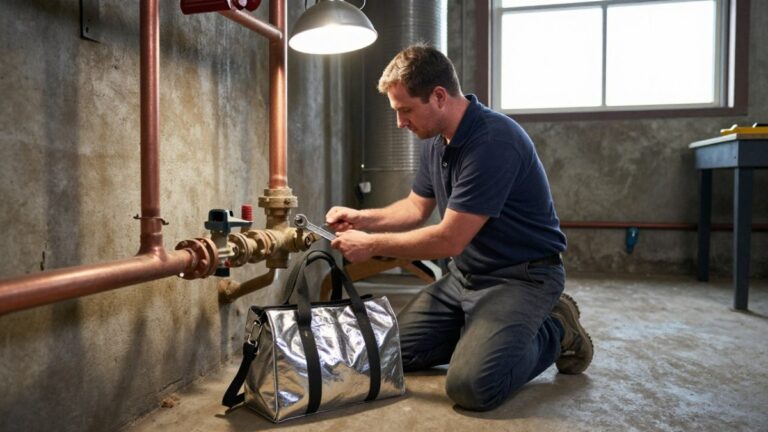
- Install the safety relief valve and route discharge safely.
- Complete venting per manufacturer specs and local code.
- Wire controls, thermostat integration, and safety interlocks.
- Pressure-test, purge air, and check for leaks.
- Fire the boiler, set combustion, and verify combustion efficiency.
- Schedule the inspection and walk the homeowner through operation.
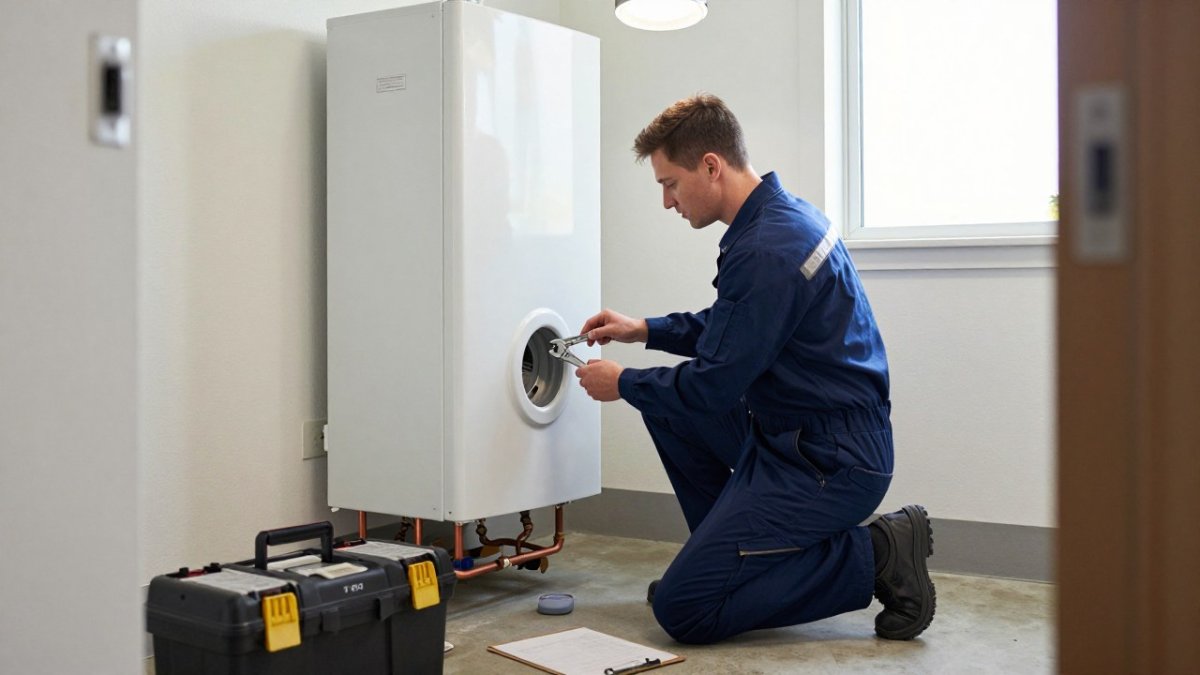
The technician is American.
Venting, Piping, and Safety Relief Valve Setup
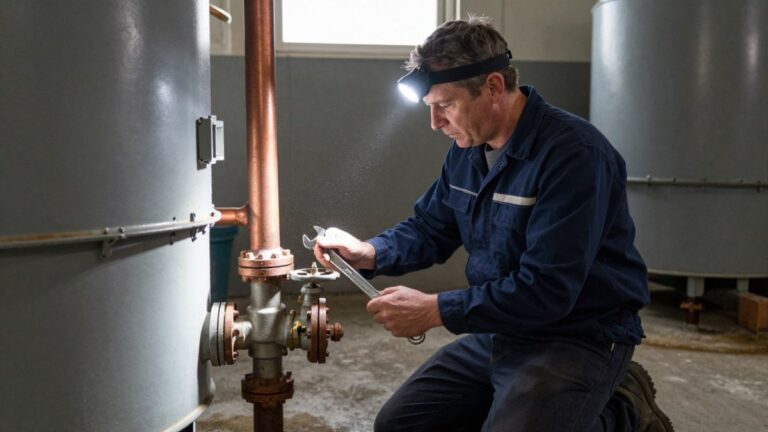
Venting is where efficiency gains quietly disappear. A condensing boiler needs the correct flue material and slope so acidic condensate drains properly. Short, direct vent runs perform better than long, winding ones. Piping should be sized to the boiler’s flow requirements, and the relief valve discharge must never be capped or routed where it can scald someone. Get these three right and the system runs as designed.
Boiler Installation Cost: What Drives the Final Number
Boiler installation cost is not a single line item. It is the sum of equipment, labor, permitting, venting materials, and any distribution work the existing system forces you to do. Two homes of the same square footage can differ in cost once the mechanical room is opened, which is why estimates depend on site inspection.
A professional estimate typically breaks out the following cost components.
Equipment. The boiler itself is usually the largest single line. A standard atmospheric unit sits at the low end; a high-AFUE condensing boiler with modulating firing sits at the top.
Labor. Labor scales with access and complexity. A straight swap in an open basement with existing gas and venting is the cheapest scenario. A conversion from steam to hot water, a move to a different wall, or a tight closet with no clearance adds hours and materials.
Permits and inspection. Mechanical permit fees are set locally and are usually modest, but they are non-negotiable. A contractor who folds the permit into a vague lump sum is hiding the fact that he may not pull one.
Venting and piping. New flue material, condensate drain routing, gas line resizing, and pipe insulation all show up here. Because venting and piping must suit the boiler’s output, boiler sizing is part of planning the installation correctly.
Distribution upgrades. This is the wildcard. Old radiators, undersized piping, or a single-zone system that should be zoned can push the total well past the equipment cost. Ask your installer to separate “boiler replacement” from “system upgrade” so you can see what you are actually buying.
Electrical and controls. A new circuit, a low-water cutoff, outdoor reset controls, and thermostat wiring are small line items individually but add up.
The Cost-Benefit Math of an Efficient Upgrade
The financial case for a modern condensing boiler rests on three levers: lower fuel consumption per unit of heat, fewer service calls over the unit’s life, and any utility rebates or tax incentives available for high-efficiency equipment. A boiler with a higher AFUE converts more of each dollar of fuel into heat, so the annual savings depend on your climate, your fuel price, and how much you currently spend. The payback period on a high-efficiency upgrade can shorten when the old unit was oversized or poorly maintained, because those systems waste fuel in ways a correctly sized condensing unit does not.
Watch out: a quoted price that is dramatically lower than every other bid usually means a missing permit, reused venting, or no commissioning. Those shortcuts cost more later than they save now.
For a closer look at the factors behind the number, see our breakdown of residential and commercial boiler installation cost.
Reading AFUE Ratings and Comparing Efficiency
The AFUE rating, Annual Fuel Utilization Efficiency, is the percentage of fuel energy a boiler converts into usable heat over a typical year. An 85 AFUE unit turns 85 cents of every fuel dollar into heat and sends the rest up the flue. A 95 AFUE condensing unit turns 95 cents into heat. That ten-point gap is the entire savings story, and it compounds every heating season.
AFUE is measured under standardized test conditions, so it is useful for comparing models against each other, not for predicting your exact bill. Your real savings depend on sizing, distribution, and how the system is controlled.
How to Compare Models by AFUE and Fuel Type
Start with the equipment label and the manufacturer’s spec sheet. Look for three numbers together: AFUE, BTU input, and BTU output. The output is what actually heats your home; input is what you pay for. A condensing boiler’s advantage comes from recovering latent heat from the exhaust, which is why it needs the correct vent material and a condensate drain.
Fuel type changes the comparison. Gas condensing boilers routinely reach the mid-90s AFUE. Oil-fired condensing units exist but are less common and carry different venting and maintenance needs. Electric boilers are rated differently and are usually compared on operating cost rather than AFUE alone. Propane behaves like gas but at a different price per BTU, so the same AFUE can produce very different annual savings.
Cross-check ratings against the ENERGY STAR product criteria for boilers before you buy. A high rating only pays off if the boiler is correctly sized and the distribution system is in decent shape. Efficiency is a system property, not a sticker.
Why a Higher AFUE Can Still Disappoint
A 96 AFUE boiler installed oversized will short-cycle, and short-cycling throws away much of the theoretical gain. A condensing boiler paired with high-temperature radiators that never let it condense will run like a standard unit. Outdoor reset controls, correct sizing, and a distribution system that can run at lower water temperatures are what let a high-AFUE unit actually deliver its rating.
Watch out: an installer who quotes AFUE as the only efficiency number, without a heat loss calculation and a plan for the distribution system, is selling a label rather than a result.
Smart Thermostat for Boilers: Controls, Zoning, and Savings
A smart thermostat for boilers lets you control temperature by schedule and zone, which cuts fuel use in rooms you aren’t heating. The right controls also support outdoor reset, adjusting water temperature to match outdoor conditions instead of running flat out. That single feature often does more for efficiency than a modest AFUE upgrade.
Zoning controls divide your home into independently heated areas, so bedrooms can run cooler while living spaces stay comfortable. If your system supports it, ask about smart thermostat and home comfort control during the install rather than retrofitting later.
Optimizing Efficiency After Installation
Efficiency doesn’t end at commissioning. Annual preventative maintenance keeps combustion tuned, catches failing components early, and preserves your warranty. Low-water cutoff testing, pressure checks, and burner service are the routine items that keep a boiler running near its rated performance.
Add pipe insulation to exposed runs and seal gaps around flues. Set back temperatures when the house is empty. These small moves compound. Our annual boiler maintenance service covers the checks that protect both efficiency and safety.
Common Mistakes to Avoid and When to Call a Licensed Pro
The biggest mistake is treating a boiler swap as a weekend project. Gas connections, venting, and pressure vessels are regulated work, and a botched install can be lethal. The second mistake is hiring on price alone without verifying licensing and insurance.
Watch out: an installer who won’t pull a permit is telling you something about how the rest of the job will go.
Call a licensed professional when you smell gas, hear banging or kettling, see water around the unit, or your CO alarm sounds. For anything beyond a thermostat adjustment, get a pro. You can contact our team for a straight answer on whether repair or replacement makes sense.
Request a Boiler Installation Quote from TCC Mechanical
Getting the sizing, permits, and venting right the first time is what separates a system that saves money from one that drains it. TABORS COMPLETE COMFORT Mechanical LLC has served homes and businesses since 2005, with licensed and insured technicians, transparent upfront pricing, and same-day emergency service. We work on a range of heating systems. Get started with TABORS COMPLETE COMFORT Mechanical LLC and request a boiler installation quote for your home.
A boiler that’s sized right, vented correctly, and maintained annually will outperform a bigger, fancier unit installed in a hurry. If you’re weighing a replacement, the smartest first step is a proper heat loss calculation and an honest conversation about your existing distribution system. TABORS COMPLETE COMFORT Mechanical LLC offers transparent, upfront pricing, certified experts, and over 21 years of local experience. Get started with TABORS COMPLETE COMFORT Mechanical LLC and request your quote today.
Frequently Asked Questions
Can I install a boiler myself?
In most jurisdictions, a gas-fired boiler installation requires a licensed contractor and a permit, so a full DIY install is not realistic. Boiler installation involves gas piping, venting, electrical connections, and pressure vessel safety, all of which are inspected against building codes. Homeowners can handle prep work like clearing the mechanical room and reviewing sizing, but the actual hookup and commissioning should be done by a licensed professional. Attempting it yourself can void warranties and fail inspection.
What are the installation requirements for a boiler?
Boiler installation requirements typically include a mechanical permit, compliance with local building codes, correct venting for the boiler type, adequate combustion air, a properly sized gas supply line, and a safety relief valve piped to a safe drain. Condensing boilers also need a condensate drain. Clearances from walls and combustibles must follow the manufacturer’s manual. A licensed installer confirms all of this before commissioning and schedules the required safety inspection.
How do I choose the right size boiler for my home?
Boiler sizing for a house starts with a heat load calculation, not square footage alone. A contractor measures insulation, window area, air leakage, and climate to determine the required BTU output. Oversizing wastes fuel and causes short cycling; undersizing leaves rooms cold. For hydronic systems, the installer also checks radiator or radiant output and pump capacity. Ask for a written load calculation so you can compare quotes on equal footing.
What makes a boiler energy efficient?
The biggest factor is the AFUE rating, which measures how much fuel becomes usable heat. Condensing boilers reach the mid-90s by capturing heat from exhaust gases, while older steam and non-condensing units often sit in the 80s or lower. Efficiency also depends on correct sizing, pipe insulation, thermostat integration, and zoning controls. Preventative maintenance keeps combustion efficiency high. A high-AFUE unit installed poorly will underperform a mid-range unit installed correctly.
Does a boiler need to be hardwired?
Most modern boilers need a dedicated electrical circuit, and many are hardwired to a junction box or connected through a service switch. Smart thermostats for boilers usually require a low-voltage control connection, and some need a common wire or a power-stealing kit. Your installer should confirm the electrical requirements in the manufacturer’s manual and have a licensed electrician handle any new circuit work. This is part of the permit and inspection process in most areas.
How long does boiler installation take?
A straightforward replacement in an existing hydronic system often takes one to two days, including removal of the old unit, piping, venting, and commissioning. New installations or conversions from another heating type can take three to five days, especially if new piping, zoning controls, or electrical work is needed. Permit and inspection scheduling can add time. Ask your contractor for a written timeline and confirm whether inspection sign-off is included.