
Common Causes of High Energy Bills: A Bill Audit Guide
Last Updated: November 11, 2026
Quick Summary
The most common causes of high energy bills are heating and cooling systems running longer than they should, aging or failing equipment, air leaks, and unnoticed phantom loads. Billing errors, longer billing cycles, and rate changes can also raise costs. Comparing kWh usage on your bill each month is the best first step to finding the source.
- Compare kWh used each month, not just the dollar total, to tell usage from rate changes.
- Heating and cooling use more energy than anything else in most homes.
- Check for estimated readings, since they can overcharge you for months before correction.
- A plug-in power meter shows the real draw of individual appliances and devices.
- Sealing attic air leaks is commonly considered a cost-effective starting point.
Table of Contents
- Start With Your Bill: What the Numbers Tell You
- Heating and Cooling: The Biggest Driver of Most Bills
- What Uses the Most Electricity in a Home
- Why Your Electric Bill Is So High in Winter
- When Your Bill Doubled in One Month: Meter Errors, Estimates, and Rate Changes
- Aging Equipment, Phantom Loads, and Air Leaks
- Next Step: Booking an HVAC Check Before the Next Bill Arrives
- Frequently Asked Questions
Start With Your Bill: What the Numbers Tell You
Your electric bill is the best clue you have for tracking down high energy bills. Most homeowners glance at the total and pay it.
Look for the billing period dates too. Some bills cover 33 days instead of 30, which adds more usage.
- Compare kWh used, not only the total dollar amount
- Check the billing period length
- Note whether readings are actual or estimated
The article points to a few numbers on your bill that reveal where high costs come from.
| Bill check | What to look for | Why it matters |
|---|---|---|
| kWh used per month | Compare the last 12 months | Usage up means more power draw |
| Price per kWh | Check for a rate change | Flat usage with higher price means rates changed |
| Billing period length | Some bills cover 33 days | A longer cycle adds usage |
| Actual vs. estimated reading | Look for the word on the bill | Estimates can overcharge for months |
Heating and Cooling: The Biggest Driver of Most Bills
Heating and cooling use more energy than anything else in most homes. Department of Energy notes that space heating and cooling make up a large share of a typical home’s energy use (Heating, Ventilation, Air Conditioning, Refrigeration, and Water Heating).
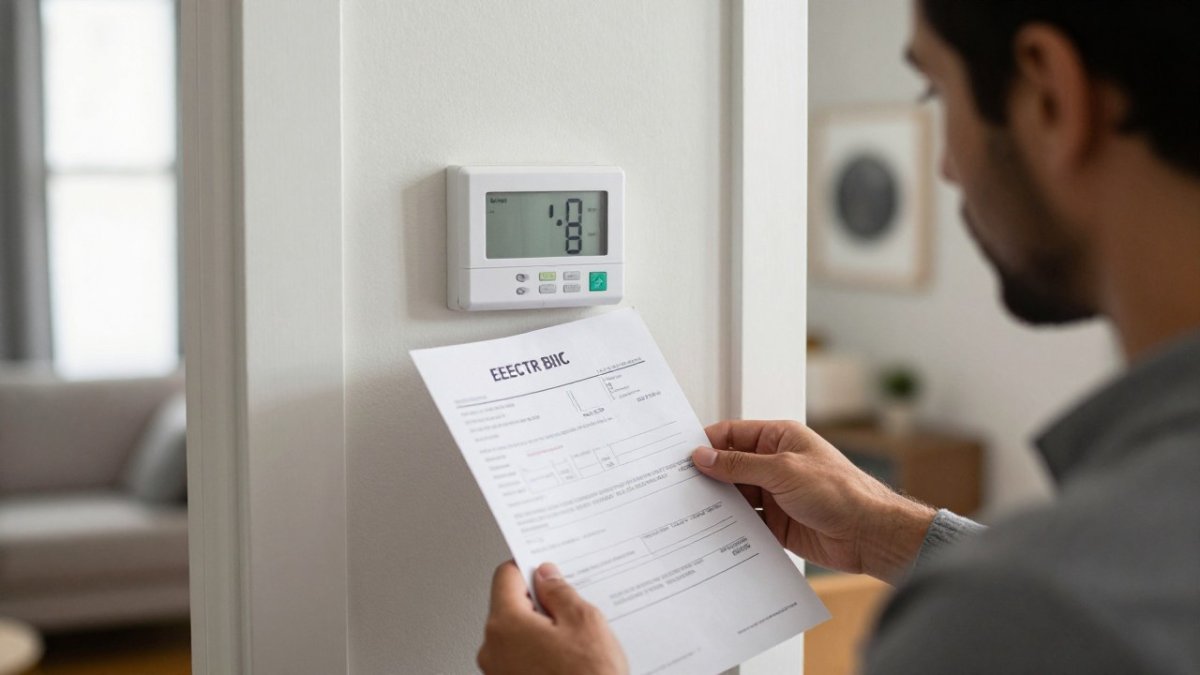
Check your thermostat settings first. Setting the temperature lower in winter or higher in summer while you’re away cuts load quickly. Dirty filters and blocked vents can force a system to work harder.
Why Air Conditioning Spikes Show Up in Summer
Air conditioning is the usual cause of summer bill spikes. Hot weather keeps the compressor running for hours each day. A failing unit, low refrigerant, or a clogged coil can make it run even longer to reach the same temperature. Watch for a system that never seems to shut off, or rooms that stay warm despite constant cooling.
What Uses the Most Electricity in a Home
Heating and cooling usually top the list, but the loads that surprise people are the ones that run quietly for hours: water heaters, refrigerators, clothes dryers, pool pumps, dehumidifiers, and older freezers. The way to stop guessing is to build a simple load inventory and put a number on each item. That turns a vague worry into a ranked list you can act on.
Build a Load Inventory in Four Steps
- List every major load. Walk the house and write down anything that heats, cools, moves air, or runs a motor: HVAC equipment, water heater, refrigerator, freezer, dryer, washer, dishwasher, oven, pool or spa pump, dehumidifier, space heaters, and any always-on electronics.
- Find the wattage. Check the appliance label or the manufacturer’s spec sheet. Labels usually list watts or amps; if you see amps, multiply by 120 for a standard 120-volt circuit or by 240 for a 240-volt circuit to get watts. For 240-volt appliances like dryers, water heaters, and central AC, the label often lists both.
- Estimate daily hours. Use duty cycle, not just on-time. A refrigerator compressor may run roughly a third of the day; a central AC may run 30% to 60% of the hour on a hot afternoon; a water heater cycles on and off around the clock.
- Convert to cost. Multiply watts by hours, divide by 1,000 to get kWh, then multiply by your rate per kWh from the bill. Do this for a typical day and multiply by 30 for a monthly estimate.
Worked Examples You Can Copy
The numbers below are illustrative, not quotes, and your actual wattage and rate will differ. Use your own bill’s rate in place of the example rate.
- Central air conditioner: A 3-ton unit draws roughly 3,000 to 3,500 watts while running. At 6 hours of compressor run time per day and a rate of $0.17 per kWh, that is about 18 to 21 kWh per day, or roughly $3.05 to $3.55 per day and $92 to $107 per month.
- Electric water heater: A 4,500-watt element running about 3 hours per day uses roughly 13.5 kWh, or about $2.30 per day and $69 per month at the same rate.
- Refrigerator: A modern unit may average 100 to 150 watts with duty cycle factored in, or roughly 2.4 to 3.6 kWh per day, about $0.41 to $0.61 per day and $12 to $18 per month.
How to Prioritize What to Fix First
Rank your loads by monthly cost, not by how often you notice them. The top two or three items usually account for most of the bill. A pool pump, an old second refrigerator in the garage, or a resistive space heater running all winter often outranks everything else.
Watch out: nameplate wattage is a maximum, not average draw. A 1,500-watt space heater on a low setting may draw 750 watts, and an inverter-driven AC may ramp down to a fraction of its rated draw, so treat label math as an upper bound and refine it with a plug-in power meter on 120-volt loads.
Where to Get Better Numbers
A plug-in power meter, available at many hardware stores, measures actual watts and cumulative kWh for a 120-volt appliance over a day or a week. For 240-volt equipment, a whole-home monitor that reads the main panel can break usage down by circuit. Many utilities also expose hourly or daily usage in their online account or app, which lets you match a spike to the hour it happened.
Estimated monthly cost by appliance
Why Your Electric Bill Is So High in Winter
Winter bills often climb because electric heat, heat pumps, and space heaters run more, which is a common reason for high energy bills in cold months. A home that depends on electric resistance heat can see a much bigger bill than one with gas heat.
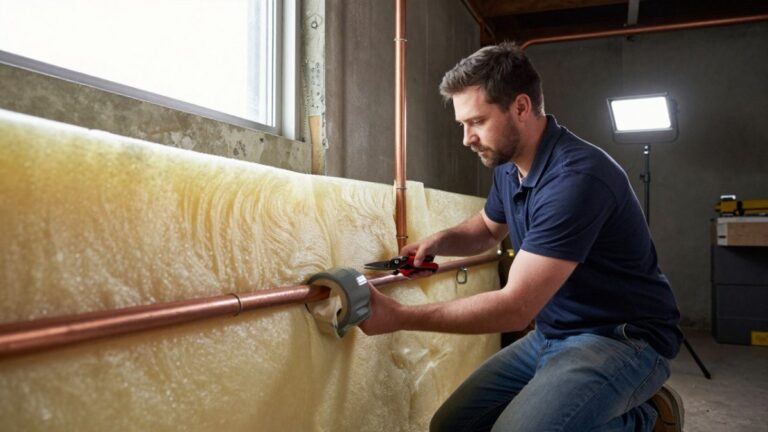
Poor insulation and air leaks make winter costs worse. Drafts around windows, doors, and attic hatches let warm air escape. Sealing those gaps and checking attic insulation can lower the load.
When Your Bill Doubled in One Month: Meter Errors, Estimates, and Rate Changes
A sudden doubling is rarely just higher use. First, the utility may have billed an estimated reading that missed the real usage for several months. Second, the billing cycle may have grown longer. Third, the utility may have raised rates or added fees.
Contact your utility if the numbers do not match your habits. Ask them to verify the meter reading and explain the rate on your bill. If a landlord controls the account or the building, ask them for the same records.
Aging Equipment, Phantom Loads, and Air Leaks
These three causes share a trait: they are easy to name and hard to prove. The useful skill is isolating which one is actually moving your kWh, because each has a different fix and a different cost. Work from the cheapest test to the most expensive.
Phantom Loads: Measure Before You Believe
Phantom load, sometimes called standby power, is the draw from devices that are off or idle: TVs, cable boxes, game consoles, chargers, smart speakers, printers, and microwave clocks. Individually these are small, often 1 to 10 watts each.
To find the real offenders, use a plug-in power meter on each suspect device and read the standby watts. Cable boxes and older game consoles are frequently the largest.
Aging Equipment: The Failure Modes That Waste Power
Older appliances lose efficiency gradually, then fail in ways that waste power suddenly. Common patterns include:
- Refrigerators and freezers: A worn door gasket lets cold air escape, so the compressor runs longer. A simple dollar-bill test, closing the door on a bill and seeing if it pulls out easily, flags a bad seal. A 15-year-old refrigerator can use noticeably more than a modern efficient model, though the payback on replacement depends on your rate and the unit’s condition (Refrigerators).
- HVAC equipment: A failing dual run capacitor can keep a compressor or fan from starting cleanly, causing it to hum and draw current without doing useful work. A dual run capacitor replacement in Chicago, IL is a common, quick fix for this problem. A low refrigerant charge makes the system run longer for less cooling. A dirty condenser coil raises head pressure and run time.
- Water heaters: Sediment buildup on the tank bottom insulates the burner or element from the water, lengthening every heating cycle. Annual flushing slows this.
Watch out: a capacitor that fails can leave a compressor trying to start repeatedly, which is hard on the equipment and can trip a breaker. If you hear clicking and humming from an outdoor unit without the fan spinning up, shut it off at the thermostat and contact a qualified technician rather than letting it cycle.
Air Leaks and Insulation: Find the Path, Not Just the Draft
Air leaks waste energy year-round, but the biggest ones are often not where you feel a draft. Attic hatches, recessed lights, rim joists in the basement, and the gap where plumbing and wiring penetrate exterior walls frequently leak more than windows.
Duct leaks deserve separate attention. In a typical home with ducts in an unconditioned attic, a meaningful share of conditioned air can be lost before it reaches a room.
Isolate the Source Before You Spend
The fastest way to separate these causes is a controlled test. Turn off every non-essential circuit at the breaker panel for an hour and note the meter reading before and after; the remaining draw is your baseline.
If the baseline draw with everything off is still high, that points to something hardwired, such as a water heater, well pump, or a failing appliance, and a licensed electrician should trace it.
Next Step: Booking an HVAC Check Before the Next Bill Arrives
Start with the bill audit above. At TABORS COMPLETE COMFORT Mechanical LLC, we help Chicagoland homeowners and businesses with HVAC repair, installation, and maintenance. HVAC services in Chicago, IL cover furnace and AC repair, installation, and maintenance. A furnace maintenance tune-up in Chicago and air conditioning service in Chicago, IL can each help bring costs back down.
Stop guessing about your energy bill. Book a check with TABORS COMPLETE COMFORT Mechanical LLC and get clear answers.
Frequently Asked Questions
Why is my electric bill so high all of a sudden?
A sudden jump usually has one of a few causes: a heating or cooling system working harder than usual, a recent change in your utility’s rate schedule, an estimated meter reading that was corrected in a later bill, or a new device or appliance drawing power. Compare your current kilowatt-hour usage with the same billing period last year, and check whether your rate or billing cycle changed. If usage is up without a clear reason, an HVAC inspection can rule out a failing component before the problem gets worse.
What uses the most electricity in a home?
In most homes, heating and cooling systems use the largest share of electricity, followed by water heating, refrigerators, clothes dryers, and cooking equipment. Lighting and electronics add up over time but usually use less per device. Exact shares depend on home size, climate, and how often each appliance runs. Your utility’s energy-use breakdown or a home energy audit can show which category drives your bill.
Why is my electric bill higher in winter?
Winter bills rise mainly because electric heating, heat pumps running on backup strips, and space heaters draw more power, and days are shorter so lights run longer. Air leaks, poor insulation, and a thermostat set high all increase heating demand. Seasonal rate changes at some utilities can also raise the cost per kilowatt-hour. Sealing drafts, servicing your heating system, and setting a steady thermostat schedule are practical first steps.
Can a faulty HVAC system cause a high energy bill?
Yes. A dirty filter, low refrigerant, a failing blower motor, or a worn compressor forces the system to run longer to reach the set temperature, which increases energy use. Ductwork leaks can waste conditioned air before it reaches rooms. Regular tune-ups that check airflow, refrigerant levels, and electrical components often catch these problems early, before they raise your bill noticeably or cause a breakdown.